National Institutes of Health, National Library of Medicine
Mechanism
R16 Support for Research Excellence (SuRE)
Award number
1R16LM015384-01
Principal Investigator
Dr. Timothy Oladunni
Institution
Department of Computer Science, School of Computer, Mathematical and Natural Sciences, Morgan State University
Project period
September 10, 2026 – July 31, 2030
Project Overview
ORBIL-AI investigates a fundamental problem in multimodal machine
learning: redundant information across learned
representations. When a model combines several views of
the same signal, such as time-domain, frequency-domain, and
time–frequency representations of an electrocardiogram
(ECG), standard fusion methods optimize only the prediction task
and assume that each stream will contribute something new. In
practice, separate encoders can learn overlapping features of the
same events, so that adding streams need not add information.
The project builds on the published Complementary Feature Domains
for Optimal ECG Multimodal Deep Learning Performance (CFD-MED)
work, published as
“Rethinking Multimodality”
(IEEE Access, 2025),
and asks whether explicitly encouraging complementary,
near-orthogonal representations improves predictive performance,
probability calibration, interpretability, and generalization.
It does so by adding two kinds of constraint to the learning
objective: information-theoretic penalties on redundancy between
streams (normalized mutual information and maximum canonical
correlation) and a geometric penalty that pushes the latent
representations toward orthogonality.
The questions are about representation learning and information
theory; ECG classification is the setting in which they are
tested. The Research Strategy notes that the principles are not
specific to ECG; within this project they are studied with ECG
data.
Schematic: redundant streams overlap heavily; complementary
streams contribute information the others do not.
ORBIL-AI is a research project investigating fundamental scientific
questions. It is not a clinical product, a validated technology, or a
research center, and its methods have not been clinically validated.
Project Aims
The three aims below are summarized from the project’s
Research Strategy. All describe planned work.
Aim 1
Develop and validate ORBIL-AI’s core methodology
Develop a multimodal ECG representation-learning framework with
three specialized encoders: a 1D-CNN for the time-domain
waveform, a Transformer for the frequency spectrum, and a 2D-CNN
for time–frequency scalograms. Investigate a composite
learning objective that adds three regularizers to the task loss:
normalized mutual information, maximum canonical correlation, and
latent-space orthogonality. Evaluate each component through
systematic, hypothesis-driven ablation studies.
Ablations compare a baseline, each regularizer alone (MI, CCA, orthogonality), and the full model.
Regularizer weights tuned by a coarse grid followed by Bayesian optimization with early stopping.
Models, training scripts, and evaluation pipelines to be versioned and released publicly.
Aim 2
Evaluate ORBIL-AI’s robustness and trustworthiness
Evaluate generalization across publicly available ECG datasets,
including device- and site-held-out testing. Assess predictive
performance, probability calibration, explanation fidelity, and
robustness to signal disturbances.
Explanation fidelity: Saliency Alignment Index (SAI) and Attribution Matching Index (AMI), measured against expert-annotated ECG landmarks.
Stress tests from baseline wander to lead dropout, with documented failure modes compiled in a public “failure atlas.”
Aim 3
Capacity building and student pipeline at Morgan State University
Develop a structured undergraduate and master’s student
research program with paid research positions, collaborative
research teams (“pods”), reproducible machine-learning
workflows, mentorship, and curriculum development, and support
student participation in publications and conference
presentations.
Paid fellowships for at least two students per year, with emphasis on multi-year retention.
Pods for data curation, model development and ablations, and evaluation.
Training in reproducible workflows (DVC, MLflow); weekly mentoring meetings and quarterly skills workshops.
A new course module, “Multimodal AI for Biomedical Signals,” developed with the School of Computer, Mathematical, and Natural Sciences.
Preliminary Evidence
The Research Strategy reports the following preliminary ECG
classification results (macro-F1 on a held-out set). They come from
the earlier CFD-MED work that motivated the project; they are not
ORBIL-AI project outcomes.
ModelMacro-F1 (scale 0 to 1)
Single-stream 1D-CNN (time)0.94
Two-stream fusion (time + time–frequency)0.96
Three-stream fusion (time + frequency + time–frequency)0.94
Adding a third stream did not improve on the two-stream model. The
Research Strategy reports that this coincided with higher
redundancy between streams and lower latent orthogonality, and
that saliency maps from the two-stream model aligned more
consistently with ECG landmarks. These descriptive observations
motivate studying representation complementarity directly, rather
than assuming that additional feature streams improve performance.
They are not tests of statistical significance.
Research & Training Plan
All activities below are proposed; none is reported as complete.
Planned
Information-theoretic and geometric regularization
Penalties on mutual information and canonical correlation between streams, combined with a latent orthogonality constraint.
Planned
Hypothesis-driven ablations
Isolating the contribution of each regularizer against a baseline and the full model.
Planned
Out-of-distribution testing
Device- and site-held-out partitions of public ECG datasets.
Planned
Calibration and explanation fidelity
ECE, NLL, and reliability diagrams; SAI and AMI against annotated ECG landmarks.
Planned
Robustness and failure analysis
Stress tests for noise, baseline wander, and lead dropout, with a public failure atlas.
Planned
Reproducible workflows and open source
Versioned data and code (DVC, MLflow) and a public software release.
Planned
Student training and curriculum
Paid fellowships, research pods, mentorship, workshops, and a new course module.
Scientific Significance
Redundancy and complementarity between representations are central
questions in pattern recognition and representation learning, yet
multimodal models are usually designed by heuristic combination of
inputs. ORBIL-AI treats complementarity as an explicit training
objective and evaluates its effects on calibration and explanation
fidelity as well as accuracy, aiming at principles of how
information is represented and integrated in learning systems
rather than improvements to a single model or dataset.
Prior findings
What earlier work established
Peer-reviewed work preceding the award
(IEEE Access, 2025)
found that fusing time and time–frequency representations
improved on a single-domain baseline, while adding a
frequency-domain stream produced no further gain, consistent with
redundancy.
Working hypotheses
What the project will test
That explicitly penalizing redundancy and encouraging
near-orthogonal latent representations improves predictive
performance, calibration, interpretability, and
out-of-distribution generalization. These hypotheses have not yet
been tested within the project.
Open questions
What remains unknown
How reliably redundancy can be estimated in high-dimensional
learned representations, how the three regularizers interact, and
when enforcing separation improves rather than limits what a model
learns.
Research Team
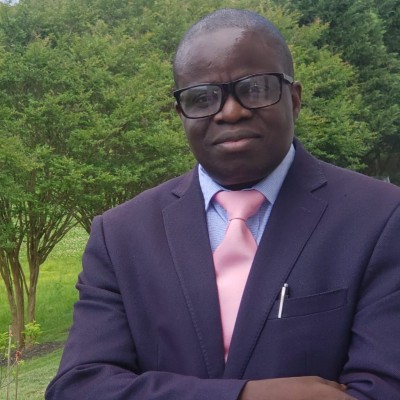
Dr. Timothy Oladunni
Principal Investigator
Assistant Professor, Department of Computer Science, School of Computer, Mathematical and Natural Sciences, Morgan State University · Profile
Preliminary findings on redundancy and complementarity in multimodal ECG, and the Complementary Feature Domains (CFD) perspective, presented at the Yale University Computer Science Colloquium (before the award).
2025Completed
Visiting faculty research fellowship at Yale University in cardiovascular science and computational AI in medicine (before the award).
September 10, 2026Completed
Project period began.
October 29, 2026Completed
Award announced by Morgan State University.
Fall 2026In progress
Undergraduate research on whether models that combine time, frequency, and time–frequency ECG representations learn complementary or redundant information, following a research plan specified in advance.
Planned four-year timeline
Adapted from Figure 3 of the Research Strategy. Months are counted
from the project start (September 2026) and bar positions are
approximate. Milestones at months 24, 36, and 48.
More Isn’t Always Better: Investigating Redundancy and Complementarity in Multimodal ECG Deep LearningComputer Science Colloquium, Yale University, April 2025. Talk.
Funding Acknowledgment
Research reported on this page is supported by the National
Library of Medicine of the National Institutes of Health under
Award Number R16LM015384 (1R16LM015384-01), as part of an award
totaling approximately $520,000 over four years, with an initial award of $130,134.
The content is solely the responsibility of the author and does
not necessarily represent the official views of the National
Institutes of Health.